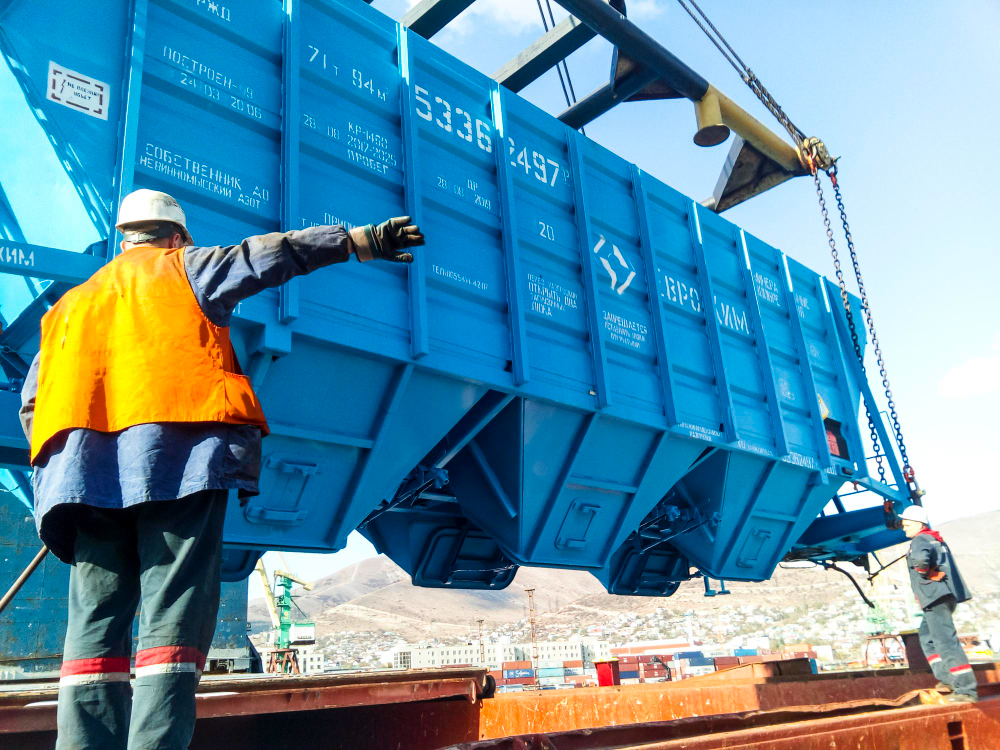
What Does a Dry Cargo Ship Carry?
Dry cargo transportation can be defined as a type of logistics used for transporting solid goods that are not in liquid form. This transportation method is particularly suitable for heavy, bulky, and large-sized products that occupy significant space. It offers many advantages, the most important being the ability to transport a wide variety of goods and its cost-effectiveness.
Depending on the characteristics and types of goods classified as dry cargo, transportation is carried out using various equipment such as pallets, containers, and box trucks. At the same time, this mode of transportation serves a very broad industry and, accordingly, a wide range of cargo types. While this feature provides a major advantage, it also offers extensive coverage for many different demands.
Multiple modes of transport can be used in dry cargo transportation, including road, air, sea, and rail. Sea transportation stands out as one of the most preferred options in dry cargo logistics due to its relatively minimized risk factors. When air transport is chosen, issues related to countries’ airspace may arise, whereas road transport may involve potential difficulties at border customs checkpoints. For these reasons, dry cargo transportation by sea is generally preferred over other modes.
What Is Included in Dry Cargo Transportation Services?
Thanks to its characteristics, dry cargo transportation allows logistics processes to be managed in a highly effective and efficient manner. Dry cargo ships, through the systems they use, help ensure a smooth logistics flow. Transportation by dry cargo vessels follows a liner structure, meaning it operates on regular schedules with known departure days and times. As a result, it follows a specific plan and port schedule.
This system is crucial for tracking when cargo leaves the port, enabling both customers and shippers to monitor the shipment’s location, and estimating delivery dates and expected arrival times. These features save time throughout the process and allow for easier control of the supply chain.
In general terms, the supply chain refers to the entire complex process from the moment goods leave a business until they reach the end customer. It includes stages such as procurement, production, and storage. The structured and scheduled nature of dry cargo transportation supports the smooth operation of all these processes.
How Is Dry Cargo Transportation Carried Out?
There are several important factors to consider during dry cargo transportation. For companies in particular, ensuring that the entire process—from loading to final delivery—is completed successfully is critical. Therefore, great care is taken to ensure that cargo transported by ship is delivered without damage from the port of loading (POL) to the port of discharge (POD).
Proper packaging and securing of the cargo significantly reduce the risk of damage during transit. In addition, the use of enclosed containers and pallets in dry cargo transportation allows goods to be transported safely without being affected by various weather conditions.
Ro-Ro vessels that transport wheeled vehicles, dry bulk carriers that transport goods such as grain, sugar, and salt, and container ships that carry consolidated cargo are among the main types of dry cargo vessels.
Which Products Are Transported as Dry Cargo?
In dry cargo transportation, solid goods other than liquid cargo are transported. This includes dry bulk goods such as fertilizer, coal, grain, and sugar. In addition, heavy and voluminous items such as automotive parts, electronic devices, and furniture are also commonly transported as dry cargo.
To ensure efficient operations and prevent losses in dry bulk transportation, intermediate containers (known as “liner bags” or similar solutions) are used. These containers facilitate easy loading and unloading at ports. Since standard-sized containers used on ships are manufactured according to specific quality standards, transportation within the logistics process is carried out smoothly.
Containers are handled using the ship’s onboard crane systems, enabling fast and efficient loading and unloading operations. Due to their size and capacity, dry cargo ships are capable of carrying between approximately 70,000 and 100,000 tons of cargo.
Dry Cargo Transportation Prices
Dry cargo container prices vary depending on several factors. These factors include the type of cargo transported, the volume it occupies, the distance between ports, and, if applicable, the level of urgency.
Dry cargo ships have a very large carrying capacity, making them a highly suitable option for transporting large quantities of goods in a single voyage. When discussing logistics processes, an important concept to consider is freight (freight rate). This concept is particularly significant in international operations. Freight refers to the fee charged for transporting all cargo on a vessel from the port of loading (POL) to the port of discharge (POD). Dry cargo transportation also involves a specific freight charge.
Dry cargo freight rates fluctuate depending on seasonal changes and various market factors that can increase or decrease logistics demand. If you want to manage a smooth logistics system and ensure that your processes run efficiently, you can take a step forward by partnering with Shipeedy.